

Protein is more than just a muscle building nutrient. Protein helps with supporting energy, weight management, satiety and balancing blood sugar. Although most people in the United States consume more protein than needed in a day, most people are skipping protein at breakfast. Including protein at breakfast offers many benefits. Breakfast is more than just cereal or pancakes, check out these seven high protein breakfast ideas for weight management and blood sugar control.
Protein Basics
Protein is a nutrient vital for life and key part of any diet.
What is Protein?
From a scientific standpoint, proteins are large molecules made up of amino acids found in every part of the body. At least 10,000 different proteins make you what you are and keep you that way! (1) Proteins are used as antibodies, enzymes, and messengers and are involved in structure, transport and storage throughout the body.
Protein Containing Foods
From a dietary standpoint, proteins are essential macronutrients derived from animal or plant-based sources. The protein food group includes meat, poultry, eggs, fish, seafood, legumes, nuts and seeds. Dairy foods such as milk, yogurt and cheese also contain protein. Protein from beans, nuts, fish or poultry instead of red meat and processed meat can lead to a lower risk of disease.
Consider serving size when choosing protein rich foods. For example, 1 ounce of cooked meat, 1 egg, 2 tablespoons of peanut butter, ¼ cup tofu and 1 ounce of nuts all provide about 7 grams of protein per serving. Portion sizes are typically larger than serving size, a small chicken breast is equivalent to a deck of cards which provides about 21 grams of protein.

How Much Protein Do You Need?
The National Academy of Medicine recommends adults get a minimum of 0.8 grams of protein for every kilogram of body weight per day. For a 150-pound person, it would be 55 grams of protein per day. Most adults should consume 10 – 35% of their daily calories from protein (1).
Protein needs vary based on age, gender, health condition, dietary pattern and activity level. For children, daily protein recommendations range from 13 to 34 grams per day. Lastly, individuals with kidney disease, not on dialysis may also have lower protein requirements.
Protein and Health
The macronutrient needed for weight management and blood sugar balance is protein.
Protein for Weight Loss
Protein reduces appetite, affects hunger hormones and leads to fewer cravings. An energy deficit is needed for weight loss, but a lower intake diet is associated with increased hunger. Evidence supports a higher protein intake as protein increases satiety and reduces energy consumption (2).
Protein affects appetite-regulating hormones. By reducing hunger and increasing satiety, an individual can consume fewer calories thereby supporting weight loss. After following a high protein calorie restricted diet, appetite control, satiety and food cravings improved.
Lastly, it takes energy to digest nutrients including protein. Known as the thermic effect of food. Protein has a thermic effect of 20-30% compared to 5-10 percent and 5 percent for carbohydrates and fat, respectively. A higher thermic effect may boost metabolism.
Protein for Blood Sugar Balance
Consuming protein at breakfast can reduce spikes and crashes, improve fasting blood sugar and promote lasting energy. Protein does not provide glucose (sugar) therefore, it has a minimal impact on glucose levels.
When combining carbohydrates with protein, the amount of sugar entering the bloodstream is reduced causing a smaller rise in blood sugar levels (3). Maintaining stable blood sugar prevents spikes and crashes and promotes long-term energy.
In people without diabetes, adding dairy or plant protein to a carbohydrate containing meal elicits significant reductions in after meal glucose (4).
7 High Protein Breakfast Ideas
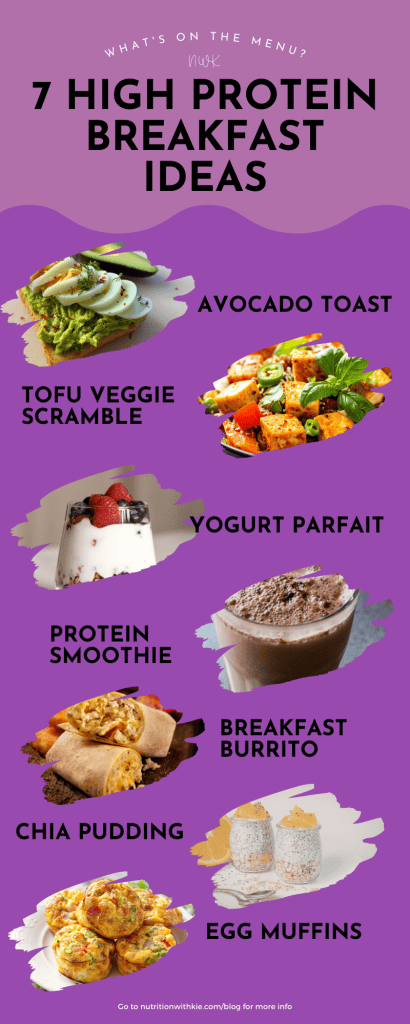
- Avocado Toast with Eggs
Combining protein, fiber and healthy fats, avocado toast is filling, easy, versatile and customizable. Slice or mash avocado onto a piece of toast, top with egg and finish with seasonings.
A basic avocado toast will provide around 10 grams of protein. Sprinkle with 2 tablespoons of feta cheese for an added 6 grams of protein.
- 2. Tofu & Vegetable Scramble
An alternative to scrambled eggs, tofu provides plant-based protein and fiber without cholesterol! A ½ cup serving of firm tofu provides 22 grams of protein and 3 grams of fiber (5).
Sauté tofu with herbs and vegetables such as spinach, mushrooms or onions. This Budget Bytes tofu scramble provides 23 grams of protein and 6 grams of fiber per 1 ½ cup serving!
- 3. Yogurt Parfait with Raspberries & Almonds
Using low-fat or non-fat Greek yogurt which provides 16 grams of protein per 5.5 ounce serving (6). Top the yogurt parfait with raspberries and almonds for more fiber and protein.
- 4. PB & J Protein Smoothie
Basic smoothie ingredients include fruits or vegetables, liquid, dairy and mix-ins. Using cow’s milk, soy milk or adding a protein powder will increase the protein content.
For a PB & J smoothie combine milk, yogurt, frozen berries, powdered peanut butter and 1 scoop of vanilla protein powder in a blender. In less than five minutes, you could have a 35-gram protein smoothie!
- 5. Chorizo Breakfast Burrito
Breakfast burritos or tacos combine scrambled eggs, beans, meat and cheese. Try this chorizo breakfast burrito for 41 grams of protein.
Serve breakfast burritos with salsa and avocado for healthy fats. Afterwards freeze leftover burritos for a high protein breakfast later in the week or month.
6. Overnight Chia Pudding
Chia seeds contain nearly 5 grams of protein per one ounce serving. Chia seeds also have omega-3 fatty acids and fiber. Mix one part chia seeds with four parts milk and yogurt then refrigerate overnight. In the morning, top with cinnamon, honey, chocolate chips, slivered nuts or chopped fruit.
7. Egg Muffins
With a combination of whisked eggs and mix-ins, egg muffins are a great make ahead breakfast. Each large egg contains 6 grams of protein. Adding lean meat and cheese boosts the protein. For added fiber add leafy greens. Try this buffalo chicken egg muffin recipe.
Start Your Morning with Protein
Protein supports overall health by reducing cravings, stabilizing energy and contributing to muscle maintenance and disease prevention. Incorporating protein rich foods into breakfast is effective for weight management and blood sugar control. Choose a variety of protein sources throughout the day for the most health benefits. Typically consumed at lunch and dinner try adding protein to breakfast meals. Call the office at 609-788-4074 to schedule an appointment and we can figure out your ideal protein needs and ways to reach that goal!