

There’s a certain feeling that arrives every August – a shift in the air, a change in the light and a quiet nudge to get things back on track. Summer is wonderful, but it’s also when routines loosen, schedules are amiss and nutrition habits start to drift.
The good news? You don’t need a drastic overhaul. What you need is a reset – a thoughtful and intentional look at what worked, what did not and which habits are worth carrying into the fall season ahead. Close out summer strong and set yourself up for a healthier and more energized fall season.
Why the End of Summer is the Best Time to Reset
Most people think of January 1st as the natural starting point for new habits but if you’re in the rhythm of back-to-school energy – whether you have kids or not – late August and early September are a more powerful reset point.
Fall brings structure. School schedules, work routines and cooler weather all make it easier to cook at home, plan meals in advance and build consistency. Instead of starting from scratch, arrive into fall with a few solid habits already in motion.
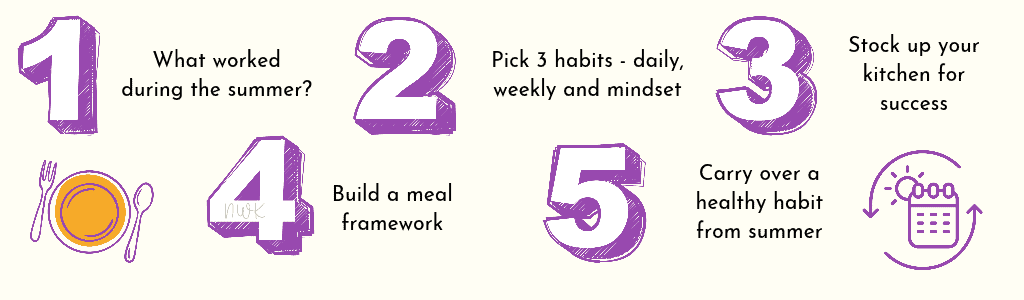
Step 1: Take Stock – What Worked?
- What meals felt easy and satisfying?
- When did I feel most energized during the day?
- What habits slipped – and why?
- Were there any new foods or recipes I enjoyed?
The habits that felt natural are the ones worth keeping. The habits that felt forced or unsustainable? In the words of famed Disney princess Elsa “let it go.”
Step 2: Pick Three Habits to Anchor Your Fall
Sustainable change doesn’t come from overhauling everything at once. Research shows that focusing on a small number of specific behaviors leads to better long-term outcomes than sweeping lifestyle changes. Choose three habits from each of the following pillars:
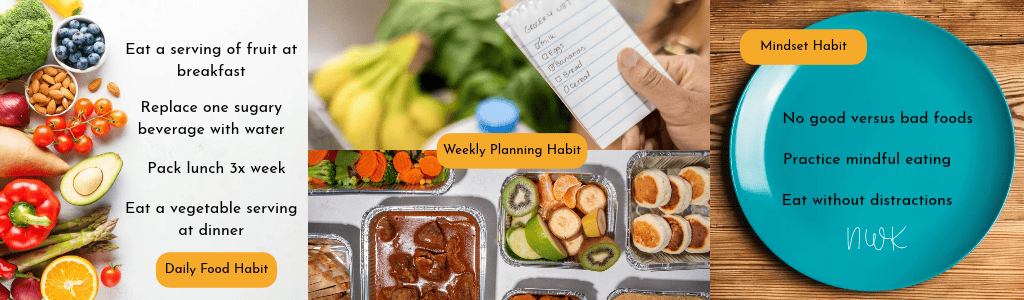
- A daily food habit. Something simple you can do every day without much thought. For example, a protein at breakfast, eating a vegetable at dinner or one less sugary beverage on the weekends.
- A weekly planning habit. One recurring action that sets you up for success. For example, a Sunday meal prep session, a weekly grocery list or batch cooking proteins and grains.
- A mindset habit. Think about how you talk to yourself and your household about food. For example, do not label foods as “good” or “bad,” eat without distractions or take three deep breaths before reaching for a snack.
Focus on SMART goals. SMART goals are specific, measurable, achievable, relevant and time based. Eat more vegetables is vague but adding one vegetable to dinner every night fits the SMART goal framework.
Step 3: Set Up Your Kitchen for Fall Success
Firstly, your environment shapes your behavior more than willpower does. A kitchen stocked for fall should have easy-to-grab produce, versatile protein and pantry staples that make the healthy choice an easier choice.
Second, in the fridge should be seasonal produce such as apples, pears, cauliflower and sweet potatoes. Next, choose a variety of proteins such as eggs, yogurt, cottage cheese, frozen fish fillets and rotisserie chicken.
Lastly, the pantry should contain whole grains, canned and frozen staples as well as healthy fats. Whole grains such as quinoa and oats can be cooked in bulk and used across multiple meals. Canned beans and frozen vegetables are nutrient dense and budget friendly. Nuts, seeds, olive oil and nut butter provide healthy fats.
Step 4: Build a Fall Rhythm Around Meals
Fall typically brings a consistent meal rhythm. You do not have to eat the same food or eat at the same time every day but having a loose structure reduces decision fatigue and prevents reactive eating that occurs when you’re busy and hungry. A simple meal framework:
- Breakfast (or first meal) within 90 minutes of waking, include a protein source to support energy and reduce mid-morning hunger. Read this blog for high protein breakfast ideas.
- Lunch (or second meal) is a mix of protein, fiber rich carbohydrates and a vegetable. This could be leftovers from the night before.
- Afternoon snacks are optional but helpful if you eat dinner late. Snacks should be a pairing of protein and carbohydrates. Examples include apple slices and peanut butter, crackers and cheese or yogurt and granola. Read the snack blog for ways to be a better snacker.
- Dinner should follow the plate method. A quarter of your plate is protein, the other quarter is starch or carbohydrates, and half the plate is vegetables.
Step 5: Carry One Summer Win into Fall
From step one, identify one thing you did well over the summer. Maybe you started taking walks after dinner, batch cooking on a day off or making smoothies for breakfast. Whatever the healthy habit is, build it into your fall routine. A habit built during the summer does not automatically survive in the fall unless you decide it does.
Make September the New January
No new diet, cleanses or resolutions needed just reflection as you approach the fall season. Reflect on your nutrition, physical activity and health habits from the summer. Keep the healthy habits that work and ditch anything that did not. Choose a daily, weekly and mindset habit to practice in the fall. Do a kitchen refresh and create a loose meal structure.
Want personalized support heading into the fall? Nutrition with Kie offers in-person appointments for individuals and families. Call the office or send an email to schedule an appointment and head into fall with a plan that works for you and your family.